
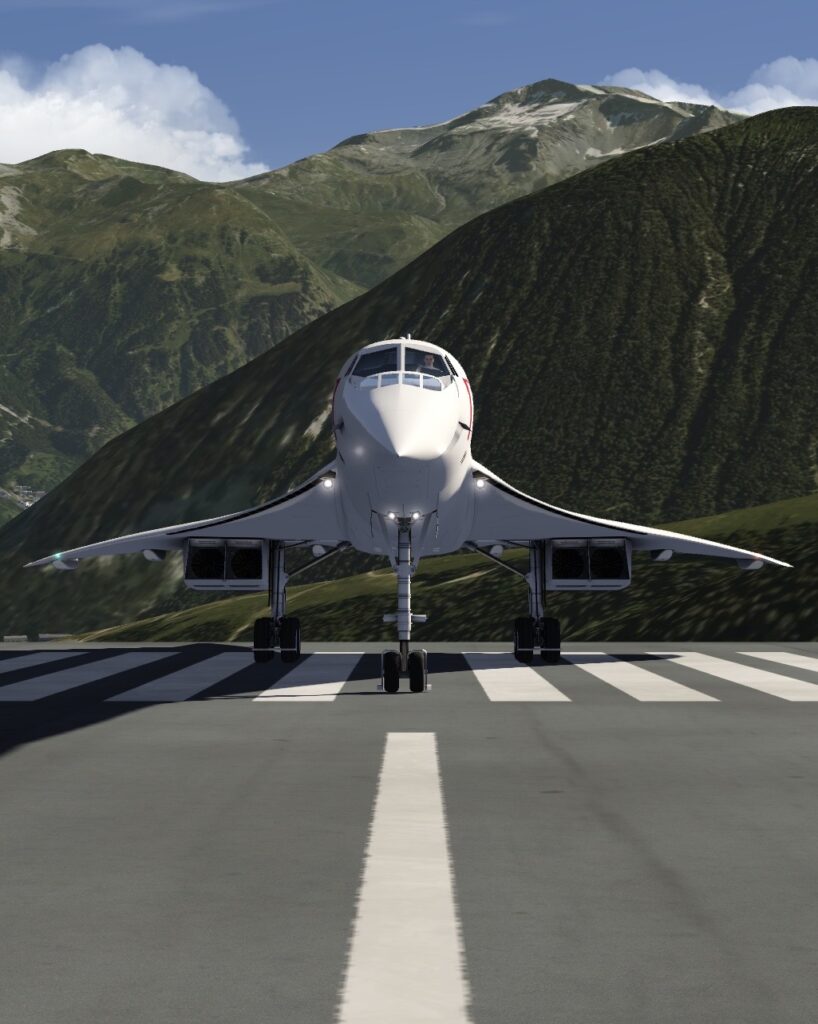
In the history of aviation, there was once a time when passengers could wake up in London, fly faster than the speed of sound, and land in New York just in time for breakfast. This impossible dream of speed was made a reality by only one aircraft—The Concorde. Developed jointly by Great Britain and France in the 1960s and 70s, this supersonic passenger jet remains one of the greatest and most breathtaking engineering marvels in human history.
This is the complete story of how Concorde took to the skies, ruled the upper atmosphere, and why it ultimately came to a tragic and permanent end.
🚀 1. The Rise and Phenomenal Speed of Concorde
Concorde was no ordinary airplane. It cruised at a staggering speed of Mach 2.04—roughly 1,354 mph (2,180 km/h). This meant the aircraft traveled at more than twice the speed of sound.
Slashed Travel Times: While a standard commercial airliner takes about 7 to 8 hours to fly from London to New York, Concorde could cross the Atlantic in just 3.5 hours.
Faster Than the Earth’s Rotation: It flew so fast that if you took off from London in the evening, you would land in New York earlier local time than when you departed. You literally outran time.
Luxury and Prestige: With its iconic “droop-nose” design (which lowered for better visibility during takeoff and landing) and slender delta wings, Concorde became the ultimate status symbol. Flying on it was a luxury reserved for royalty, rock stars, billionaires, and top world leaders.
⚠️ 2. The Beginning of the End: High Costs and the ‘Sonic Boom’
Despite its magnificent technological success, Concorde was plagued by severe economic and environmental challenges right from the start:
Massive Fuel Consumption: Concorde burned an enormous amount of fuel—about 6,700 gallons per hour. This made operating the jet incredibly expensive, pushing ticket prices up to thousands of dollars, far out of reach for regular travelers.
The Sonic Boom Problem: When Concorde broke the sound barrier, it generated a massive thunder-like shockwave called a “sonic boom.” People on the ground complained of shattered windows and terrifying noise. As a result, the US and many countries banned Concorde from flying at supersonic speeds over land. It was restricted to flying fast only over open oceans.
💥 3. The Tragedy That Changed History
For over 25 years, Concorde boasted a near-flawless safety record. However, everything changed on July 25, 2000, during a catastrophic accident in Paris, France.
Air France Flight 4590 ran over a stray piece of titanium on the runway during takeoff. The debris punctured a tire, which exploded and sent a massive rubber fragment into the fuel tank. A major fire erupted, and the plane crashed into a nearby hotel just moments after liftoff. All 113 people on board and on the ground tragically lost their lives. This single disaster severely shattered public confidence in supersonic travel.
🛑 4. The Final Retirement
Concorde was grounded for over a year while engineers added safety modifications, and it briefly returned to service. However, the aviation world had shifted. The September 11 terrorist attacks in 2001 caused a massive global downturn in air travel.
Faced with skyrocketing maintenance costs, dwindling passenger numbers, and expensive fuel, British Airways and Air France made the difficult decision to retire the fleet. On October 24, 2003, Concorde completed its final commercial flight, and the king of the skies permanently stepped down to become a museum showpiece.
📌 Conclusion
While Concorde was a commercial failure, it stands as a monument to human ambition and engineering excellence. More than two decades after its retirement, no other commercial aircraft has managed to match its speed, grace, and sheer brilliance in the sky.